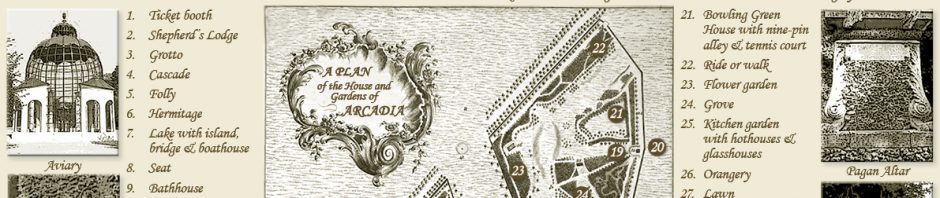
Update December 2016
Experiencing Arcadia via the Senses
Designed landscapes have always been multi-sensory spaces. Just think of an orchard. Over the course of a year it gives the scent of blossom, the taste of ripened fruit, the sound of birds, the touch of bark and as well as the more obvious visual delight as it changes with the seasons.
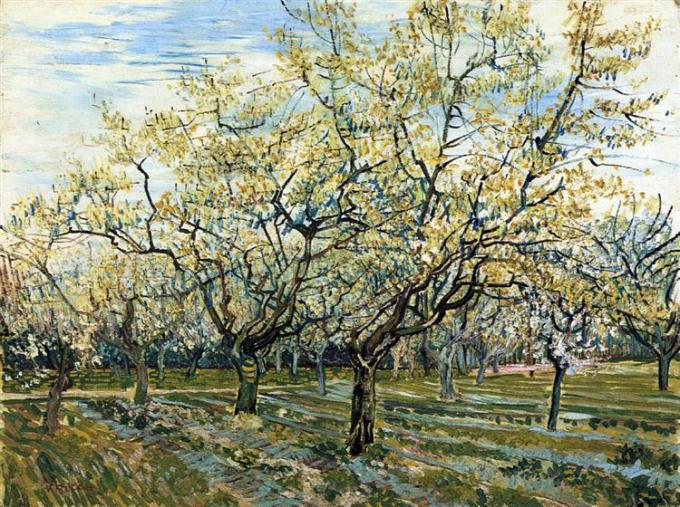 Van Gogh orchard with blossoming plum trees, 1888
As part of our Experiencing Arcadia project we have used written and visual sources to offer a glimpse into the sensory world of one particular type of landscape: the eighteenth century garden. The letters written to and from the grotto designer and botanic artist, Mrs Delany have proved a particularly rich source. For example the Hon Mrs Boscawen wrote to Mrs Delany on the 2nd of August, 1779:
It has been a charming day, and the field below my garden has exhibited a busy scene of haymakers and a grateful smell of hay.
Here, even the agricultural landscape offers visual stimulus in the scene of haymakers at work along with the scent of hay.
A more traditional designed sensory garden is described by Mrs Delany in a letter to Mrs Dewes in 1746:
Our garden is now a wilderness of sweets. The violets, sweet briar, and primroses perfume the air, and the thrushes are full of melody and make our concert complete. It is the pleasantest music I have heard this year, and refreshes my spirits without the alloy of a tumultuous crowd, which attends all the other concerts. Two robins and one chaffinch fed of D.D’s hand as we walked together this morning. I have been planting sweets in my “Pearly Bower” – honeysuckles, sweet briar, roses and jessamine to climb up the trees that compose it, and for the carpet, violets, primroses and cowslips.
The scent and beauty of the garden is complimented by the birdsong which also have an impact on how she feels. The senses then are essential to thinking about the experience of gardens in the past – something which many academics are taking on board (see references below). They also offer us a way of connecting contemporary historic garden visitors with their past counterparts.
For example this lovely snippet which describes the use of a wheelbarrow to take a picnic outdoors brings a fun mental image to the concept of feasting in the garden as well as highlight the sensory role of taste in the landscape:
Lady Austen’s lackey, and a lad that waits on me in the garden, drove a wheelbarrow full of eatables and drinkables to the scene of our fete champetre. A board, laid over the top of the wheelbarrow, served us for a table; our dining-room was a roothouse, lined with moss and ivy. At six o’clock, the servants, who had dined under the great elm upon the ground, at a little distance, boiled the kettle, and the said wheelbarrow served us for a tea-table. We then took a walk into the wilderness, about half a mile off, and were at home again a little after eight, having spent the day together from noon till evening, without one cross occurrence, or the least weariness of each other — a happiness few parties of pleasure can boast of.
This experience was recorded by the poet William Cowper in a letter to the Rev Wiliam Unwin in July 1781 and reminds us of the role taste played as gardens both produced food and offered spaces in which eating and drinking could take place.

Detail from Thomas Robbins, ‘View of a Gloucestershire Country House: A Garden View, with Picnic Party in Center Foreground’, ca. 1755, Oil, pen and ink on vellum, varnished, Yale Center for British Art, Paul Mellon Collection
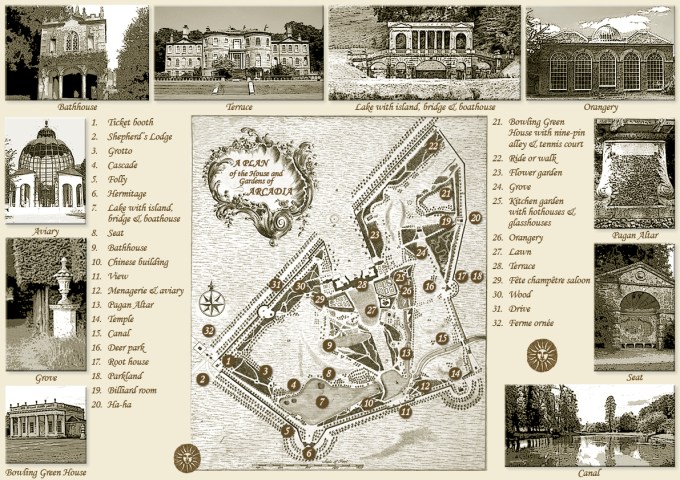
Just these few examples give us a glimpse into what it felt, tasted and sounded like when experiencing gardens in the past. They can all be found on our website www.experiencingarcadia.org where Linden Groves and I experimented with 2015 digital techniques to bring historic gardens alive for a new digital savvy audience. This approach to gardens offers us a way of helping visitors, particularly children and teenagers, to connect with the past as well as hopefully bringing the fun back into garden history interpretation. Do come and visit us and click on our map to get a sense of the past in our idealised landscape!
* Key examples on work on gardens and the senses in the early modern period include Kate Felus, The Secret Life of the Georgian Garden (I.B. Tauris, 2016), Holly, Dugan, The Ephemeral History of Perfume: Scent and Sense in Early Modern England (Baltimore: Johns Hopkins Press, 2011), William Tullett on the sensory pleasure garden in ‘The Macaroni’s “Ambrosial Essences”: Perfume, Identity and Public Space in Eighteenth-century England’, Journal for Eighteenth-Century Studies, 38:2 (2015), pp. 163-180, Carole Rawcliffe ‘“Delectable Sights and Fragrant Smelles”: Gardens and Health in Late Medieval in Early Modern England’, Garden History 36: 1 (2008) pp. 3-21


 Dr Clare Hickman
Leave a comment